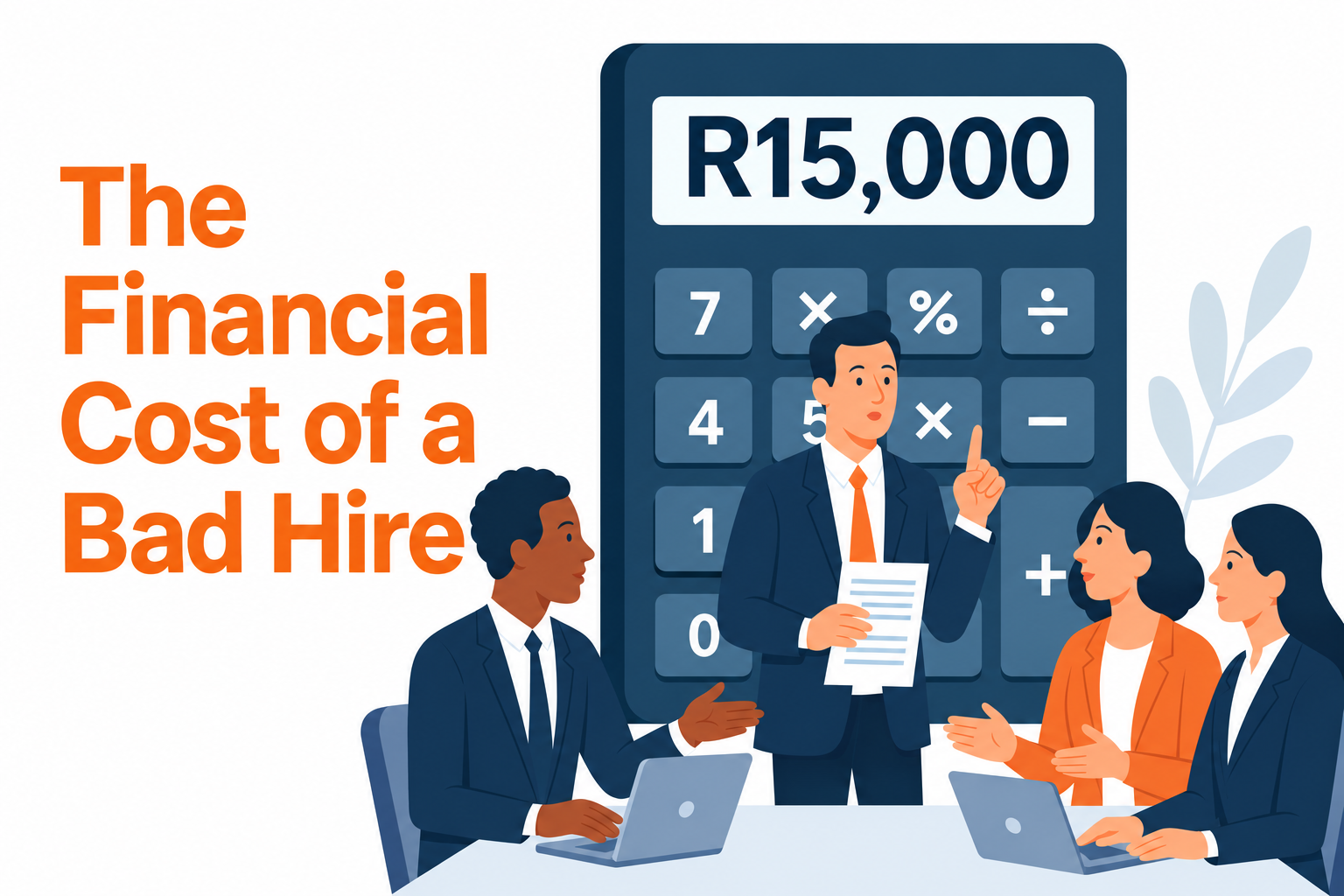
Hiring the wrong person is rarely just an HR problem. It is a business risk with financial, operational and reputational consequences that can extend far beyond the employee’s salary.
When a new hire does not work out, organisations often focus on the most obvious expense: the cost of recruiting a replacement. However, this is only one part of the real financial impact. By the time the employee leaves or the business makes the difficult decision to terminate employment, considerable time, money, and resources may already have been invested.
Understanding the true cost of a bad hire is therefore essential for businesses wanting to improve hiring decisions, protect productivity and manage risk effectively.
The Direct Costs of Hiring
Recruitment carries several direct expenses. These may include advertising the position, recruitment agency fees, interview time, assessments, background screening and onboarding.
Once the employee is appointed, the business begins investing in salary, equipment, system access, training and management support. If the person leaves after only a few months, much of this investment cannot be recovered.
The organisation must then repeat the entire recruitment process. Another vacancy must be advertised, candidates interviewed, checks completed and a replacement trained. The business effectively pays twice for the same position, without necessarily receiving the productivity or value it expected.
The Cost of Lost Productivity
A new employee usually requires time to understand the role, learn the organisation’s systems and become fully productive. During this period, managers and colleagues provide guidance, training and support.
If the employee lacks the required qualifications, experience or skills, this support may continue for much longer than anticipated. Managers may spend hours correcting errors, reviewing work and managing performance concerns. Team members may need to take on additional responsibilities, meet missed deadlines or deal with dissatisfied clients.
These costs may not appear as a separate line item in the financial statements, but they have a very real effect on the business.
The Impact on the Team
A bad hire can place significant pressure on the rest of the team. Employees may have to carry an increased workload, compensate for poor performance or correct repeated mistakes.
This can lead to frustration, declining morale and, in some cases, the loss of valuable employees who no longer feel supported. The financial impact then grows further. The business is no longer dealing with one unsuccessful appointment; it may also face reduced team performance, increased absenteeism and further recruitment costs.
A hire who does not work out is not simply an inconvenience. It disrupts a team that believed help had arrived and creates the difficult process of managing performance or uncovering something that should have been identified before the appointment was made.
Client and Reputational Risk
Employees represent the organisation to its clients, suppliers and wider market. When the wrong person is placed in a client-facing, financial, operational or senior role, the consequences may include poor service, damaged relationships, financial losses, misconduct or reputational harm.
In more serious cases, the employee may have provided false qualifications, exaggerated experience or concealed relevant information. If appropriate screening was not conducted, the organisation may face questions about whether reasonable care was taken during the hiring process.
Rebuilding client trust can take considerably longer and cost far more than completing the correct checks before employment.
Calculate the Real Cost
Many businesses underestimate the cost of a bad hire because the expenses are spread across different departments and time periods.
To help organisations understand the broader financial impact, iFacts offers a Cost of a Bad Hire Calculator. It helps businesses consider the various costs associated with an unsuccessful appointment, rather than focusing only on the employee’s salary or the cost of recruiting a replacement.
By considering factors such as the employee’s salary, length of employment, recruitment costs, HR involvement and the level of pre-employment screening conducted, businesses can gain a clearer understanding of what one poor hiring decision may actually cost.
Use the iFacts Cost of a Bad Hire Calculator to calculate the approximate cost to your organisation.
This information can be valuable when reviewing recruitment processes, motivating appropriate screening budgets and deciding which checks or assessments are necessary for a particular role. When leaders understand the potential financial exposure, pre-employment screening is no longer viewed as an unnecessary expense. It becomes an investment in risk management and better hiring outcomes.
Prevention Is More Cost-Effective Than Correction
Not every employee requires the same checks. Screening should be risk-based and aligned with the responsibilities of the position.
Identity, criminal record, qualification, employment history, credit and reference checks may all be relevant, depending on the role. Skill testing can help confirm whether a candidate has the practical ability to perform the work successfully. For positions involving trust, sensitive information or financial responsibility, integrity assessments may provide further insight into potential workplace risk.
No screening process can guarantee that every appointment will succeed. However, a structured and consistent approach provides businesses with better information before making decisions.
The true financial cost of a bad hire includes lost productivity, management time, training, disruption, client dissatisfaction, reduced team morale, replacement costs, and possible reputational damage.
Before deciding that screening is too expensive, businesses should first calculate the cost of getting the appointment wrong.