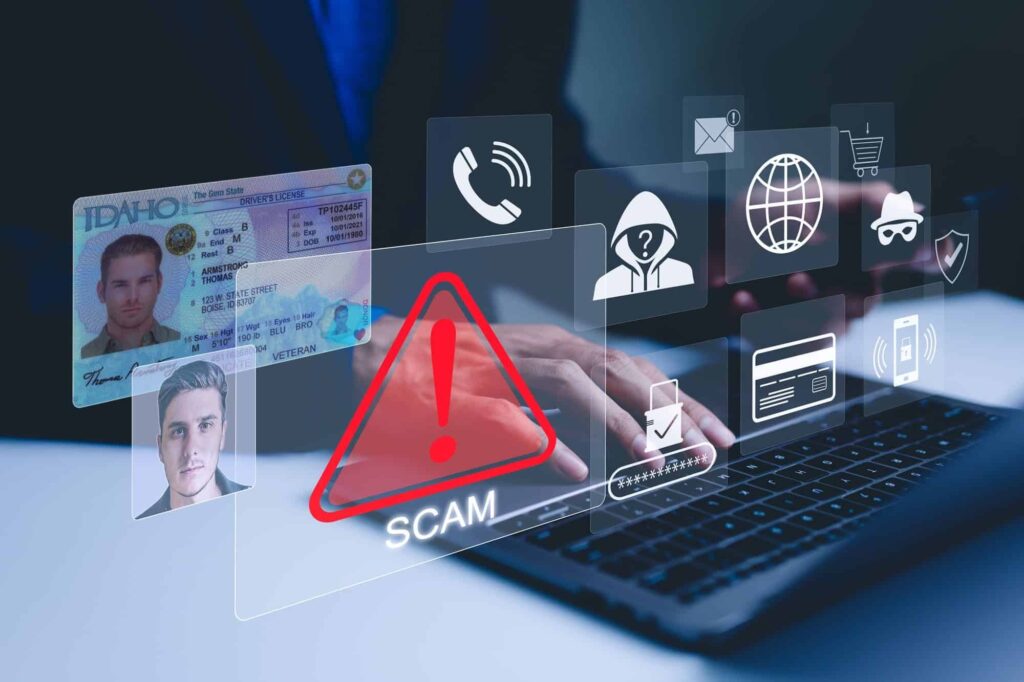
In South Africa today, your identity is worth a lot more to criminals than most people realise. Stolen or forged ID documents are a gateway to a wide range of crimes: opening bank accounts, committing fraud, laundering money, taking out loans, renting property, and even getting jobs under a false name. This highlights the importance of effective ID verification measures.
Recent investigations into identity‑related crime show exactly how organised and profitable this has become. Syndicates buy and sell ID copies on the black market, use them to impersonate innocent people, and then walk away, leaving the real person to face debt collectors, criminal dockets and a battle to clear their name.
For employers, this is not just a “personal” problem for the victim. If you hire someone using a false or hijacked identity, you are exposing your organisation to operational, legal and reputational risk from day one.
Many companies still treat ID verification as a quick box‑tick: “We have a copy of the ID, so we are covered.” Unfortunately, a copy is exactly what criminals trade and manipulate.
Proper ID verification is about answering three critical questions:
- Is this a valid, authentic ID number or document?
- Does it belong to the person sitting in front of us?
- Does that person have any linked risks (such as criminal records) that we need to know about for this role?
If you get any of those wrong, your entire screening process can be undermined. A criminal using someone else’s ID details will pass a criminal record check, because the record belongs to the real person, not the impostor. A fraudster with a sophisticated fake ID could slip through a visual check if the recruiter is rushed or inexperienced.
Once they are in, they can:
- Access systems, data and assets under a false identity.
- Open accounts or sign contracts on behalf of your business.
- Commit internal fraud, theft or corruption with little trace back to their real identity.
By the time you discover the problem, the damage is done, and you may struggle to prove who actually did what.
Local crime‑fighting experts have been warning for some time that stolen identities are a key enabler of serious and organised crime. Identity documents and ID numbers are traded, cloned and repeatedly reused. In many cases, victims only discover there is a problem when they are blacklisted, denied credit, or contacted about offences they never committed.
For employers, this means two things:
- You cannot assume that because an ID “looks fine”, it is fine.
- You cannot assume that a candidate using a valid ID number is the lawful owner of that identity.
Visual checks and photocopies are simply not enough in a high‑risk environment.
A proper ID verification process should combine:
- Electronic validation of the ID number and document against official or credible data sources (for example, checks aligned with Department of Home Affairs records or accredited verification systems).
- Biographical checks: does the ID number match the person’s date of birth, gender and other details?
- Face matching and liveness where appropriate: is the person present, and does their face match the ID photo?
- Linking ID to other checks- criminal, credit (where lawful and relevant), qualification and employment verification all rely on the ID being correct. If the ID is wrong, every other check becomes unreliable.
This does not need to slow hiring down. With the right tools and partners, ID verification can be fast, digital and integrated into your existing screening workflow.
ID verification is not just an admin step for HR; it is a frontline control in your fraud and security framework. Getting it wrong can:
- Undermine POPIA compliance if you don’t know who actually accessed personal data.
- Compromise financial controls and open doors to procurement or payroll fraud.
- Expose the business to regulatory issues in sectors like financial services, security, logistics and call centres.
- Damage your brand when clients discover that someone who misrepresented themselves was allowed to work under your name.
On the other hand, getting it right:
- Protects genuine employees whose identities might have been compromised.
- Strengthens the reliability of every other background check you perform.
- Demonstrates to clients, regulators and insurers that you take people‑risk seriously.
At iFacts, we see daily how identity issues appear in employee screening, from falsified IDs to candidates using another person’s details to hide a problematic history. That is why ID verification is built into our employee screening and vetting services as a foundational step, not an afterthought.
Our ID verification process is designed to:
- Confirm that the ID is valid and correctly formatted.
- Reduce the risk of identity fraud and impersonation.
- Provide a reliable base for subsequent criminal, credit (where applicable), qualification and employment checks.
For organisations that handle sensitive information, finances, high‑value assets or vulnerable people, this is not optional, it is essential risk management.
In a world where your ID has real criminal value, employers cannot afford to treat identity as a formality. If you don’t know exactly who you are hiring, every other assurance you think you have about that person may be built on sand.
For more on the criminal value of your identity:
https://www.mikebolhuis.co.za/post/project-the-criminal-value-of-your-identity-part-1
For details on iFacts’ ID verification and employee screening services: